There are some emotional experiences that people can describe and some that people can only live through. Two of the most painful inner experiences seen in Cluster-B personality traits (especially borderline-type patterns) are:
“Everyone will leave me.” “There is nothing inside me.”
They often exist together; the fear of abandonment fuels the emptiness, and the emptiness intensifies the fear of abandonment. This is not drama. This is psychological survival mode.
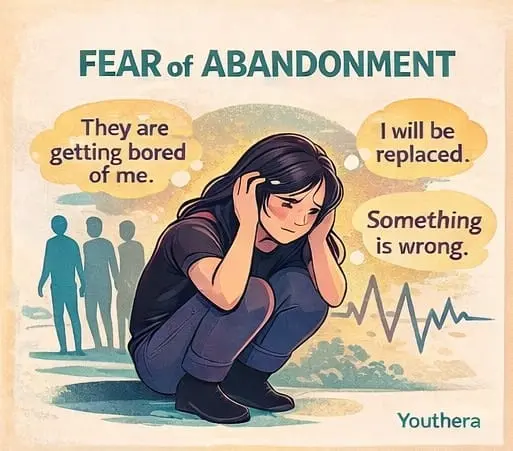
1. The fear of abandonment- not a thought, but an alarm system
For most people, separation causes sadness. For a person with abandonment sensitivity, separation triggers panic in the nervous system. The brain does not interpret distance as distance. It interprets distance as danger. The person is not reacting to the present moment; they are reacting to an old emotional memory stored in the body.
What the person internally experiences
Ø “They didn’t reply… something is wrong.”
Ø “They are getting bored of me.”
Ø “I will be replaced.”
Ø “I am about to be left.”
Even neutral events become signals:
Ø Delayed reply
Ø Change in tone
Ø Someone being busy
Ø Cancelled plans
Ø Less affection than usual
To others → small things
To them → relationship collapse
2. How the fear manifests behaviorally
The fear does not always look like fear. It often appears as anger, control, or withdrawal.
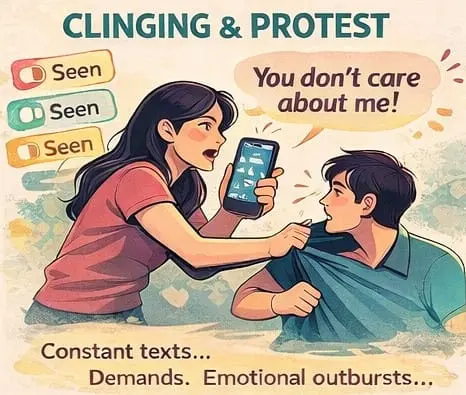
A. Clinging / Hyper-activation
The person moves closer to prevent loss.
Ø Constant texting
Ø Repeated reassurance seeking
Ø Needing proof of love
Ø Emotional dependency
Ø Difficulty tolerating partner’s independence
Hidden emotion: Terror of emotional disappearance
B. Protest Behaviors
They try to force the connection to return.
Ø Sudden anger outbursts
Ø Accusations (‘you don’t care’)
Ø Testing loyalty
Ø Threatening to leave first
Ø Emotional blackmail (sometimes unintentionally)
Purpose: “If I create intensity, you won’t leave.”
C. Push-Pull Pattern
The most confusing pattern for others.
“Come close, I need you.”
“Go away, you will hurt me.”
When closeness increases → vulnerability increases → fear increases → they push away.
Then distance increases → panic increases → they pull back.
This creates unstable relationships, not because they don’t value people, but because they feel too much when they value someone.
3. The Sense of Emptiness- The Quiet Core
After emotional storms, many individuals report something deeper than sadness:
“I don’t feel like a person.”
“I feel hollow.”
“I don’t know who I am when no one is around.”
This emptiness is not depression alone. It is often an identity disturbance.
Instead of a stable inner self, the person experiences:
Ø Shifting likes/dislikes
Ø Unstable goals
Ø Mirroring others’ personalities
Ø Chronic boredom
Ø Feeling unreal
They don’t only fear losing people, they fear losing the self they become when with someone.
4. Why Emptiness and Abandonment Are Connected
For many individuals with Cluster-B traits, Relationships regulate identity.
When someone is present → they feel real
When someone withdraws → they feel erased
So, abandonment does not just mean loneliness.
It feels like:
“Without you, I disappear.”
This is why breakups or distance can cause:
Ø intense distress
Ø impulsivity
Ø self-harm urges
Ø sudden emotional collapse
Not for attention- but to escape the unbearable void.
5. How Emptiness Manifests in Daily Life
People often expect visible chaos. However, emptiness frequently appears in quiet ways:
Ø Scrolling for hours without interest
Ø Sudden life changes (career, beliefs, friendships)
Ø Impulsive relationships to ‘feel something.’
Ø Oversharing early in relationships
Ø Feeling detached even in happy moments
Ø Chronic ‘what’s the point?’ feeling
The person is not always sad. They are unanchored.
6. The Cycle
- Inner emptiness
- Need connection to feel real
- Strong attachment forms quickly
- Fear of losing it emerges
- Hyper-reaction to a small distance
- Conflict or withdrawal
- Relationship instability
- Deeper emptiness
And the cycle repeats.
7. What This Teaches Us Clinically
These patterns are not manipulative personality flaws.
They are:
Ø Attachment injuries
Ø Emotional regulation difficulties
Ø Unstable self-structure
The behaviors are attempts to solve one question: ‘How do I stay emotionally alive when connection feels uncertain?’
Conclusion
A person with abandonment sensitivity does not love lightly. They love with survival intensity.
A person with chronic emptiness does not seek people casually. They seek existence through connection. So, what looks like too much is often a nervous system that never learned that relationships can stay even when emotions change.